Agent Experience
Monitoring & Insights

Can Scrunch show what sources are being cited by AI models in their responses?
- Does Scrunch show AI citation sources?
- Can I see which websites AI models reference?
Yes, Scrunch shows exactly which sources are being cited by AI models, including branded, competitive, and third-party sources.
Additional context: Every time an AI model (such as ChatGPT, Perplexity, Gemini, etc.) responds to a prompt a user is tracking, Scrunch records which sources were referenced.
Example
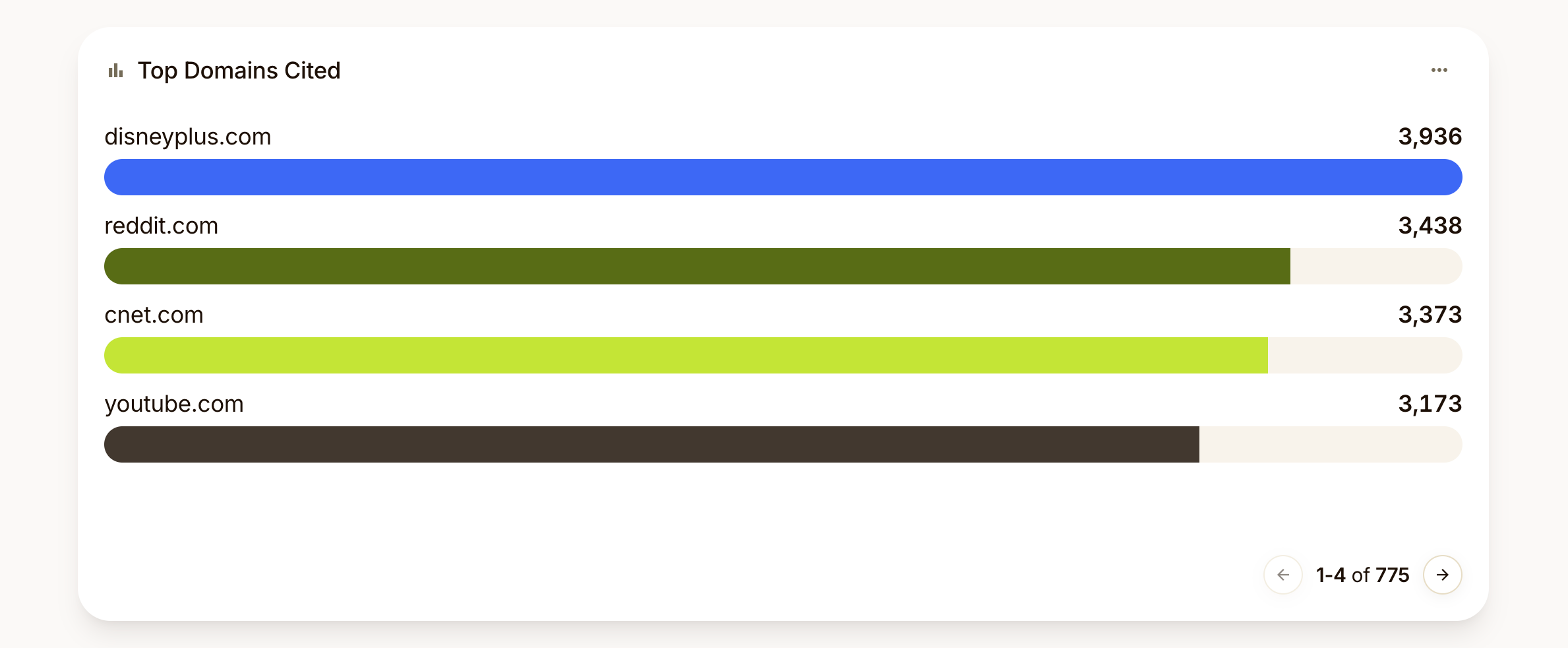
For example, imagine a Scrunch user wants to understand which sources are being cited by AI for the prompts that they’re tracking.
In Scrunch’s Citations dashboard, they can view citation share broken down by owner (their brand, competitors, and third parties) and top cited domains.
For each source (filterable by website domain or webpage URL), they can see:
- Brand or competitor mentions
- Brand-relevant topic coverage
- Unique prompt count
- Total citations
- Citation consistency rate
- Influence Score (calculated by multiplying the percentage of responses that have cited the source by the unique number of prompts)
All citation data can be filtered by:
- Timeframe
- Branded vs. non-branded prompts
- Prompt topic
- Citation topic
- AI platform
- Persona
- Funnel stage
- Country
- Custom prompt tags
- Citation owner
Follow-up question: What counts as a citation in Scrunch?
Scrunch defines a citation as any URL that was cited by an AI platform when answering a tracked prompt. Each time Scrunch collects an AI response, it scans for the full list of URLs cited, which pages contributed to the AI response, whether a user’s (or competitor’s) brand appears on those pages, and which topics the page content relates to.
If your brand isn’t shown as present when mentioned in a cited source: JavaScript-only content, bot-blocking, and temporary retrieval errors may prevent Scrunch from accessing full page content from citation sources.