


TLDR:
- Seventy percent of marketers aren't tracking brand sentiment in AI answers, and 71% aren't measuring their share of voice against competitors.
- Sixty-seven percent aren't analyzing the AI agents crawling their site—a high-intent signal in the AI era.
- Sixty percent aren't tracking which sources AI pulls from, so they don't know what's shaping AI answers.
We surveyed 600-plus marketing and PR professionals about their approach to AI search. The data shows there’s still a lot of low-hanging fruit left to pluck.
Lots of brands are testing if they show up in AI answers. Far fewer are digging into how or why.
That makes it difficult to answer business-critical questions.
Like: Are AI platforms praising you or pointing out flaws? Are you winning your category or buried under the competition? Which sources are shaping AI answers in the first place?
Here are the metrics many of your competitors are ignoring, why you should add them to your observability checklist, and how Scrunch can help.
Sentiment & share of voice
Our survey found that:
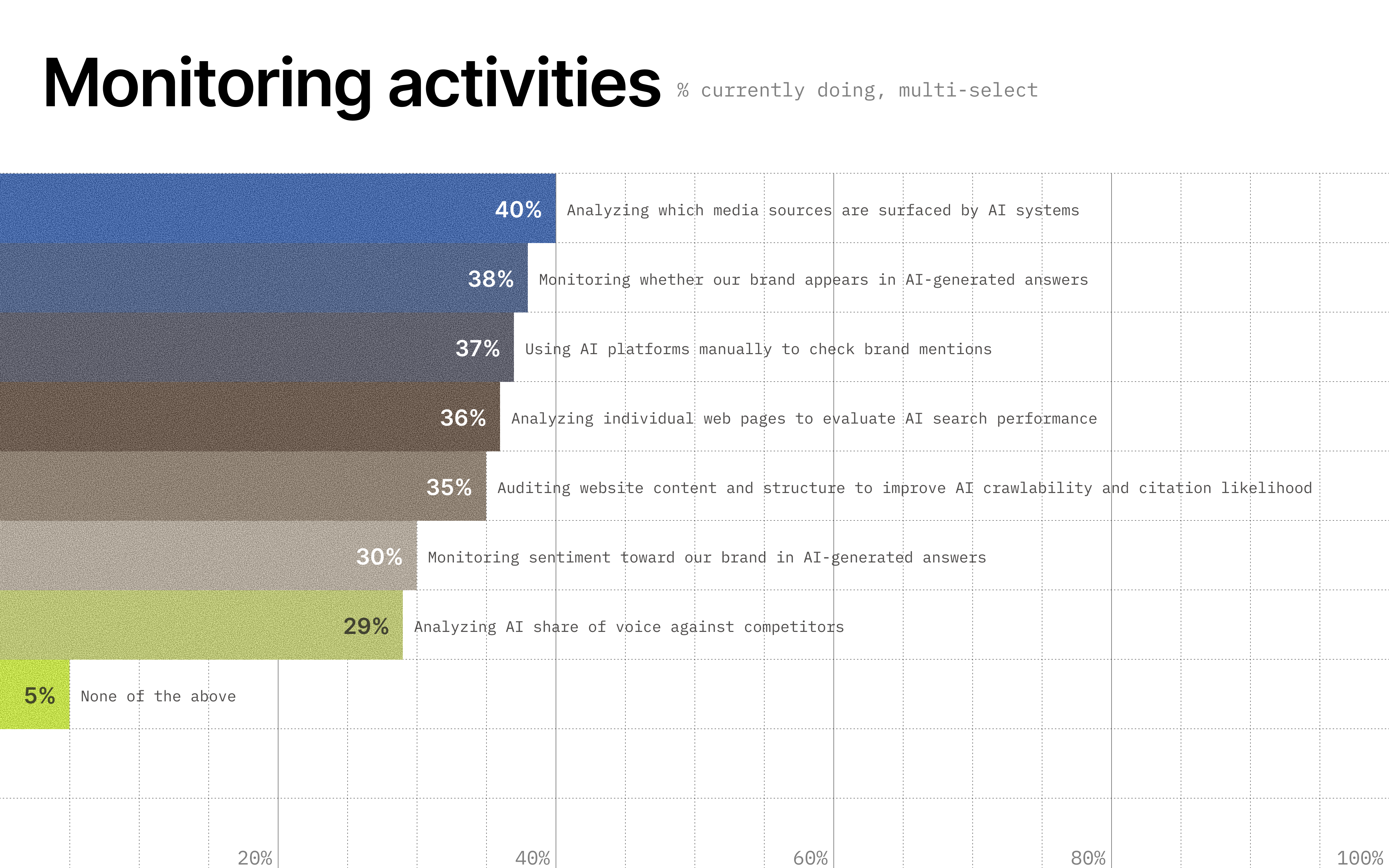
- 70% of respondents aren’t monitoring sentiment toward their brand in AI answers.
- 71% aren’t analyzing AI share of voice against competitors.
Sentiment tells you how AI platforms talk about you. Whether the language is favorable or endorsing. Whether answers include pros and cons or neutral observations. Whether your product drawbacks—accurate or not—are part of the response.
Showing up in AI answers doesn’t count for much if your brand is portrayed in a negative light.
Meanwhile, share of voice tells you how often your brand is present in AI answers versus your competitors. Brand presence can look pretty good until you compare it to your competition.
The bigger your share of voice, the more likely AI platforms are to mention or recommend you over other players in your space.
Bonus metric: Another key metric to keep in mind is answer position (i.e., where in AI answers your brand is mentioned).
Top position means you’re far more likely to be AI’s recommendation, and our research shows that when AI recommends your brand to someone new, that person becomes ~182% more likely to search you on Google, ~117% more likely to visit your website, and ~185% more likely to view your products on a retailer's page within the week.
How it works in Scrunch
- Sentiment: Scrunch shows you what percentage of the prompts you’re tracking return positive, mixed, or negative answers. Ditto for sub-brands, competitors, and competitors’ sub-brands. Filter by prompt, platform, funnel stage—whatever dimension you care about.
- Share of voice: Scrunch shows you competitive presence and top brands for your tracked prompts automatically. Drill down into share of voice across all competitors or specific ones with a click—or a conversation with our in-app AI assistant, Scrunchie.
- Position/rank: Scrunch shows you what percentage of AI answers position you at the top, middle, or bottom right out of the box. You can also easily see how you measure up in terms of numerical ranking (e.g., first, second, third).
AI agent traffic
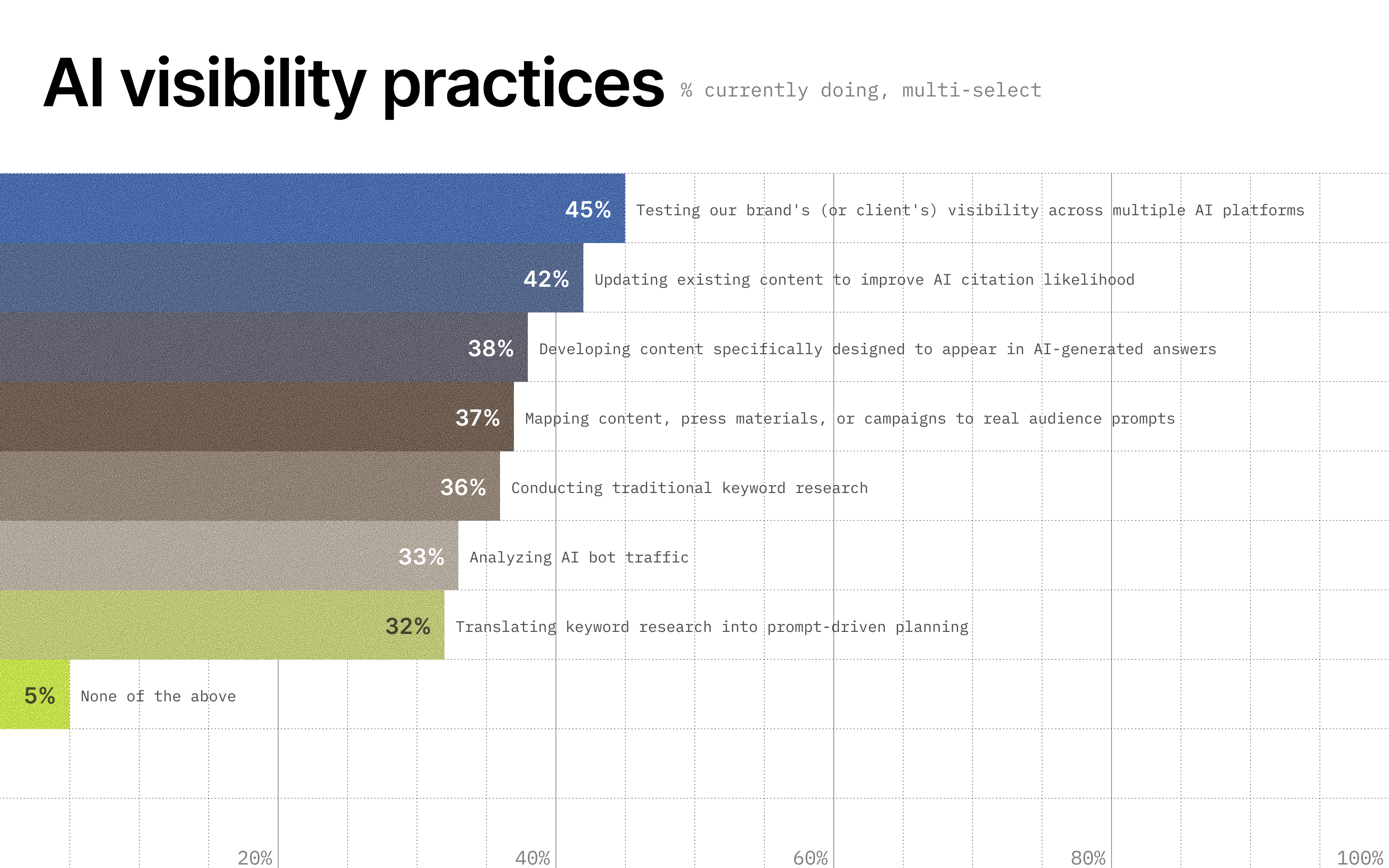
Our survey found that 67% of respondents aren’t analyzing AI bot traffic.
For as long as the internet has existed, marketers have been trained to focus on human traffic and filter out (or block) bot traffic.
That changes when AI bots are crawling your site to help a human research, compare, and choose.
Training and indexer bots are worth monitoring, but retrieval traffic is the real gold mine. Retrieval agents execute real-time web searches to answer questions related to you or your category.
And that traffic tells you a lot:
- Whether the content on your site is accessible to AI agents
- Which AI platforms are talking about you the most
- Which pages AI is using to answer user queries
All of that information helps you prioritize your AI search optimization work, from fixing site accessibility issues to focusing on specific LLMs to orchestrating content updates.
How it works in Scrunch
- Agent traffic: Scrunch shows you agent traffic over time, traffic distribution (i.e., the type of bot), human versus bot traffic, the most active AI agents on your site, which webpages are accessed most by retrieval agents, and a chronological log of recent bot requests.
Citations
Our survey found that:
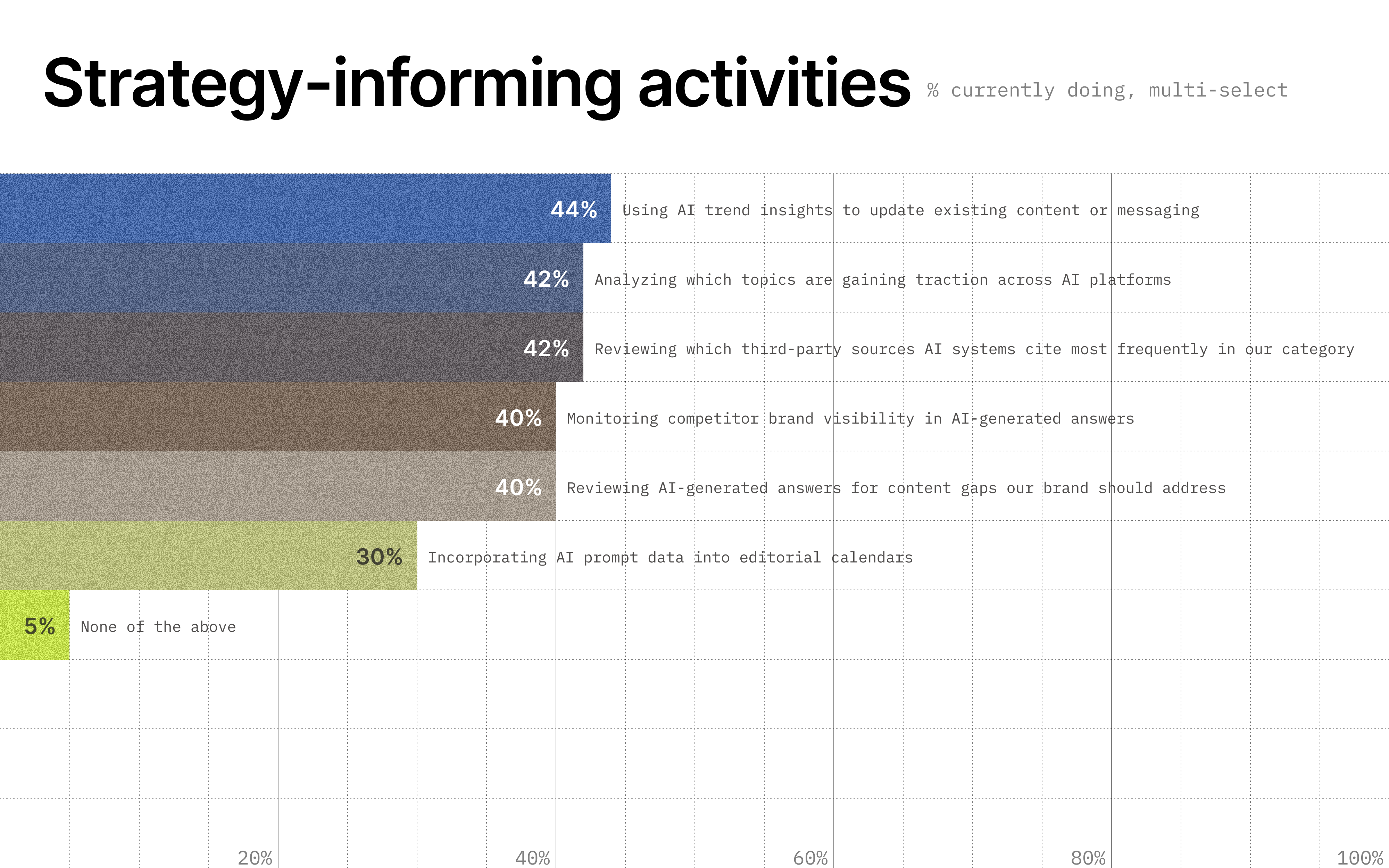
- 60% of respondents aren’t analyzing which media sources are surfaced by AI systems.
- 58% aren’t reviewing which third-party sources AI systems cite most frequently in their category.
- 61% aren’t working to secure brand mentions in trusted media sources.
Citations are the URLs AI platforms link to when they give an answer—and they help shape what those answers say.
If you want to change the output, you need to understand the input. Even better: Be the input.
Visibility into which sites AI views as authoritative is like an optimization roadmap.
You can try to rip and replace them. Or you can try to secure placement in them. Either way, citations are a shortcut to showing up more (and more favorably) in AI answers.
How it works in Scrunch
- Citations: Scrunch shows you citations by segment (e.g., social media, SEO websites), citations by owner (i.e., your brand, competitors, third parties), citation share of voice, citation breakdown by domain, and total citations by domain and URL automatically. You can easily dig into citation rate, citation influence score, and more—or let our AI assistant do it for you.
- Citation partnerships: Scrunch partners with Noble and Stacker to help you secure placement in cited sources.
From blind spots to quick wins
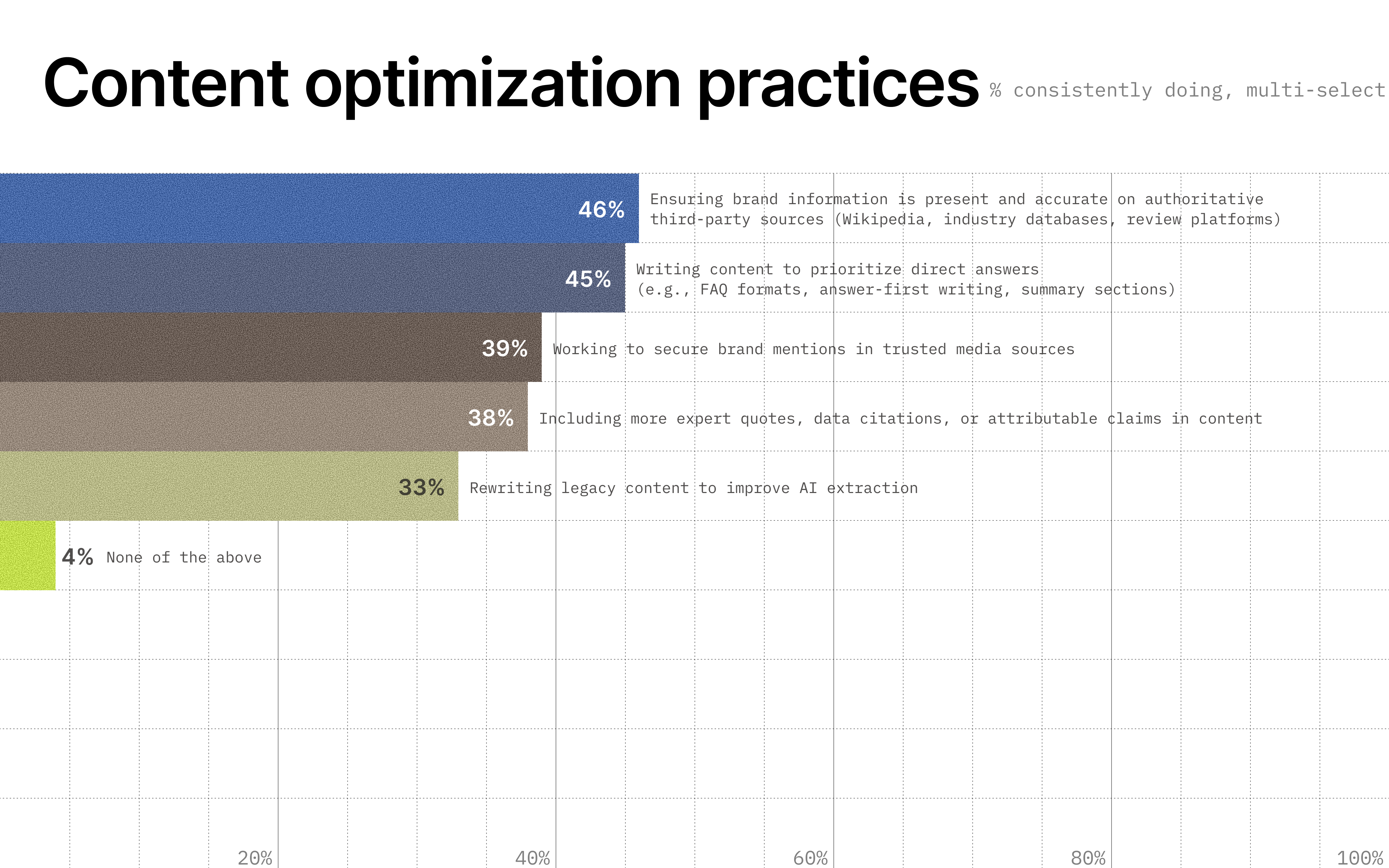
Observability is step one. You can't act on what you can't see—and right now, most teams are only seeing part of the picture.
Don't just check whether your brand shows up, see how it's positioned and how it stacks up against competitors.
Don't just focus on human visits, track the AI agents browsing on a human's behalf.
And don't just monitor mentions in AI answers, learn which sources are shaping what those answers say.
We built Scrunch to make it easy.
Want to go deeper? Read the full survey report or check out our AI search guide.
Get started with Scrunch
Get your site AI-ready so you show up in answers, get cited, and grow revenue. Try a free 7-day trial or book a demo.


