


TLDR:
- Marketers are confident they can shape AI answers (84% say so), but more than half aren't sure their strategy is correct—and 62% think they're already behind competitors.
- Most teams aren't tracking key metrics, and many are betting on cranking out more content versus optimizing what they already have.
- Misaligned KPIs, bolted-on tools, and lagging training are holding teams back—but the gap between "doing something" and "doing the right thing" presents an opportunity.
Ninety-one percent of marketing and public relations professionals have a clear, documented strategy for AI search visibility. More than half aren’t sure whether it’s any good.
That’s our new survey report in a nutshell: the friction between “we’re doing something” and “we’re doing the right thing."
Scrunch and Scribewise teamed up to survey more than 600 US-based marketing and PR pros, both in-house and agency. Our respondents span a wide range of roles, seniority levels, industries, and company sizes.
The one thing they all have in common? Pressure to show up in AI answers—consistently, accurately, and favorably. Either for their own brands or their clients.
Here are some of the top takeaways from the report.
Confidence cracks under scrutiny
Eighty-four percent of survey respondents say they’re confident they can shape AI answers, but 51% aren’t sure their strategy is the right one.
That number jumps among the people most likely to be doing the work: Junior staff are 41% more likely than the C-suite and VPs to have second thoughts about their AI search strategy.
Those same employees are also 41% more likely than senior leaders to say their organization may have moved too fast into AI visibility tactics without a clear long-term strategy (something 46% of respondents say).
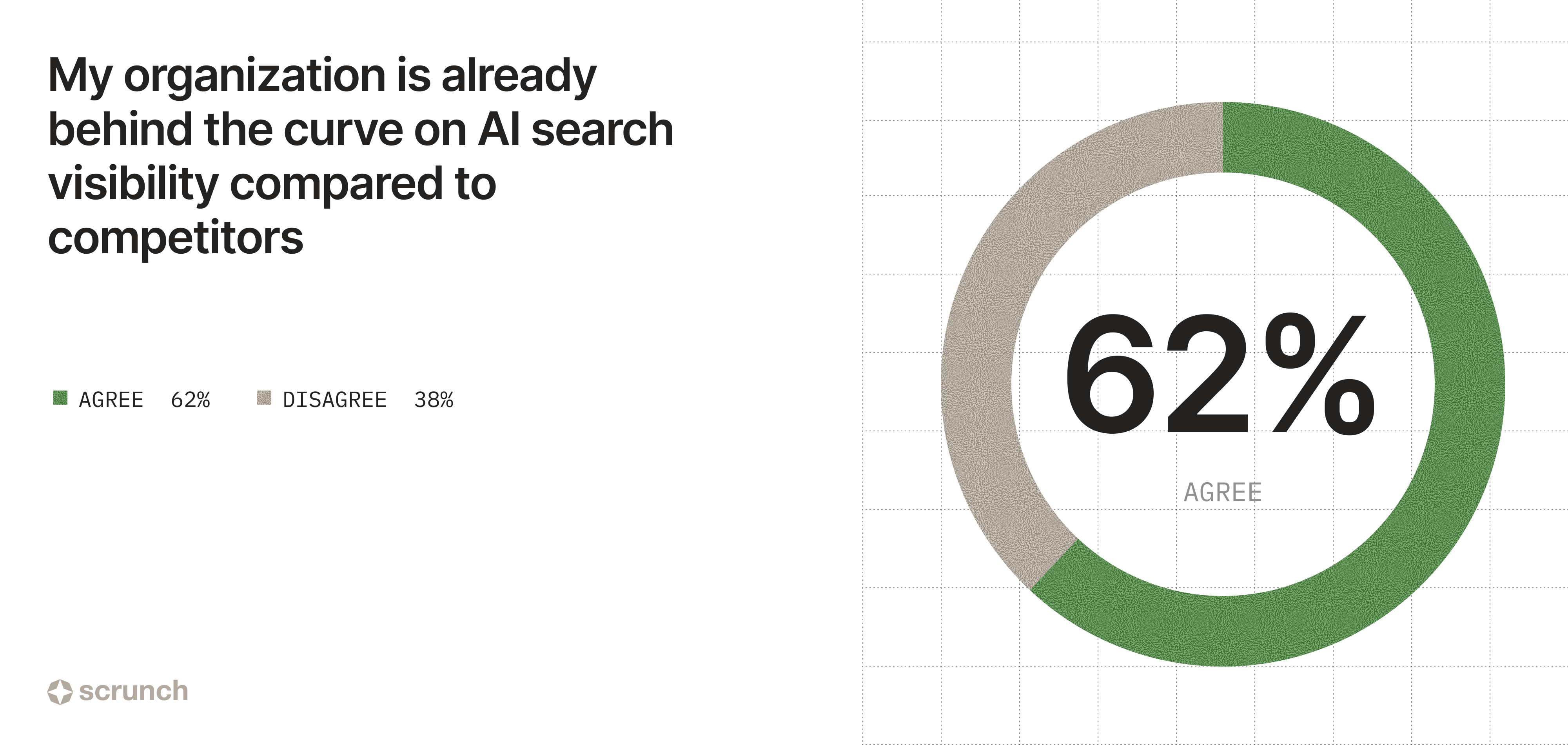
And 62% believe their organization is already behind the AI search curve compared to competitors.
Most brands haven’t moved beyond basic monitoring
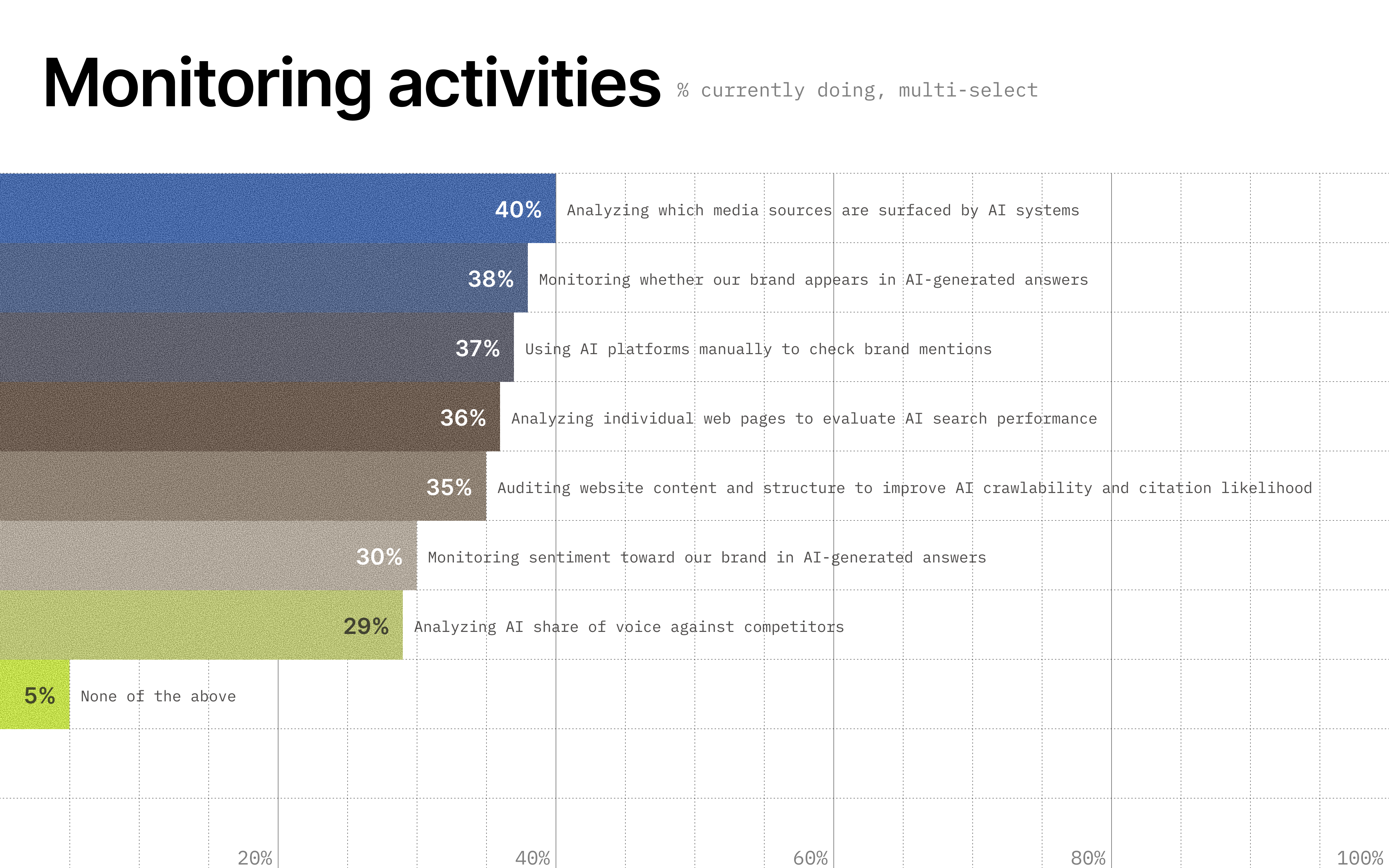
Forty-five percent of respondents are testing how they (or their clients) show up in AI answers, but monitoring is spotty (and too often manual):
- 60% aren’t analyzing which sources get cited by AI
- 70% aren’t monitoring brand sentiment in AI responses
- And 71% aren’t analyzing share of voice against competitors
Only 33% are analyzing AI bot traffic at all.
Meanwhile, 42% of the teams taking action are placing their bets on scaled content production, often with the help of AI content generation tools.
Only 23% say their primary approach is refining and optimizing existing content to improve how AI systems interpret and cite it, and only 39% are working to secure brand mentions in trusted media sources.
Misaligned expectations, tools, and skills are a drag
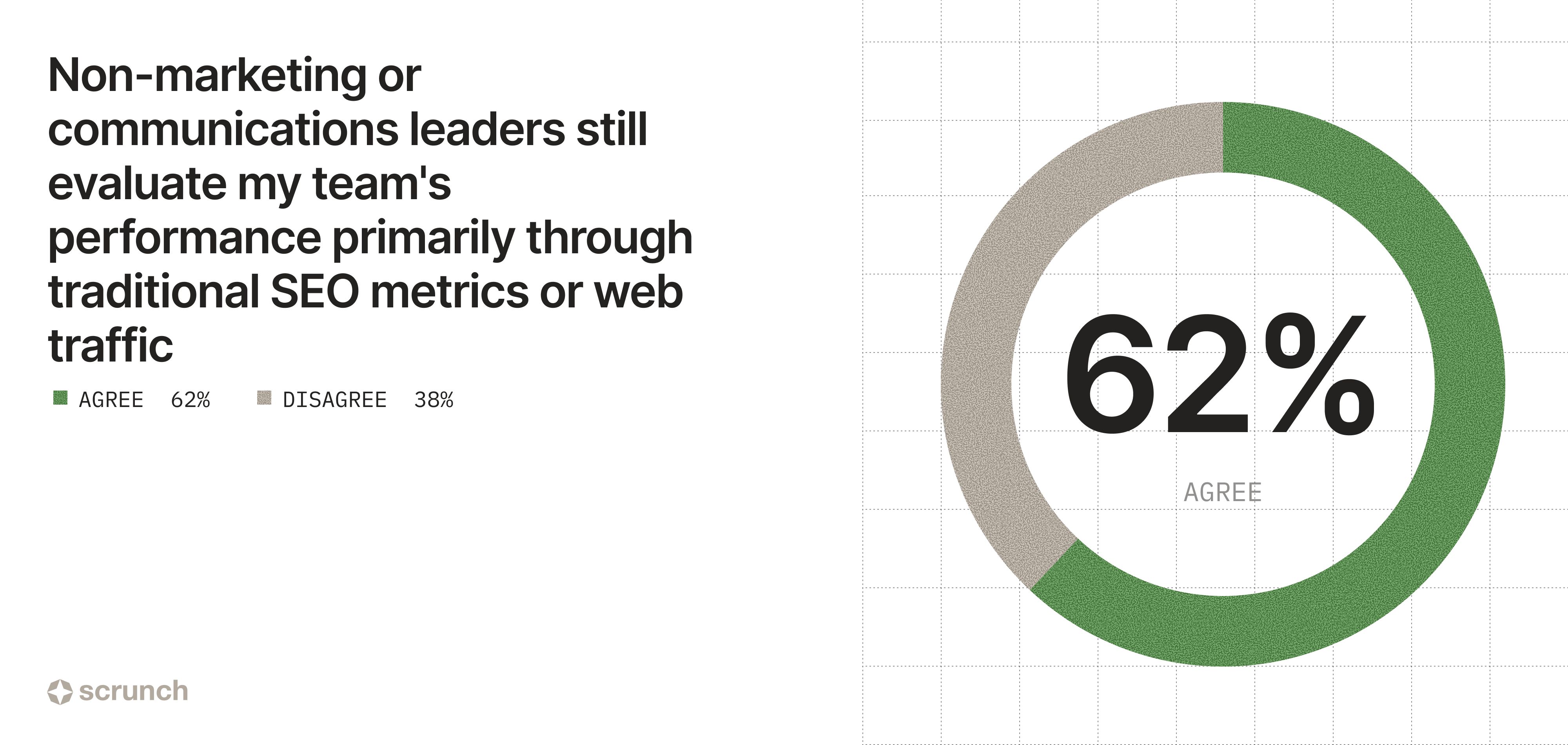
Sixty-two percent of in-house marketers say that leaders outside of marketing still measure their team’s performance based on traditional SEO metrics and web traffic—an example of metric misalignment that 52% say limits their ability to execute an effective AI visibility strategy.
The story is similar in the agency world: 80% who offer GEO services say clients interpret search through an SEO lens, which helps explain why 71% say they spend more time explaining AI search than executing on a GEO strategy.
On the technology front, 73% of respondents say they’ve invested in tooling, but much of it is bolted onto legacy SEO or PR platforms. Only 41% say they can turn data into action.
When it comes to the job itself, 87% feel more pressure to build technical skills to complement editorial and strategic ones, but 58% say their training isn’t keeping pace.
The gap is the opportunity
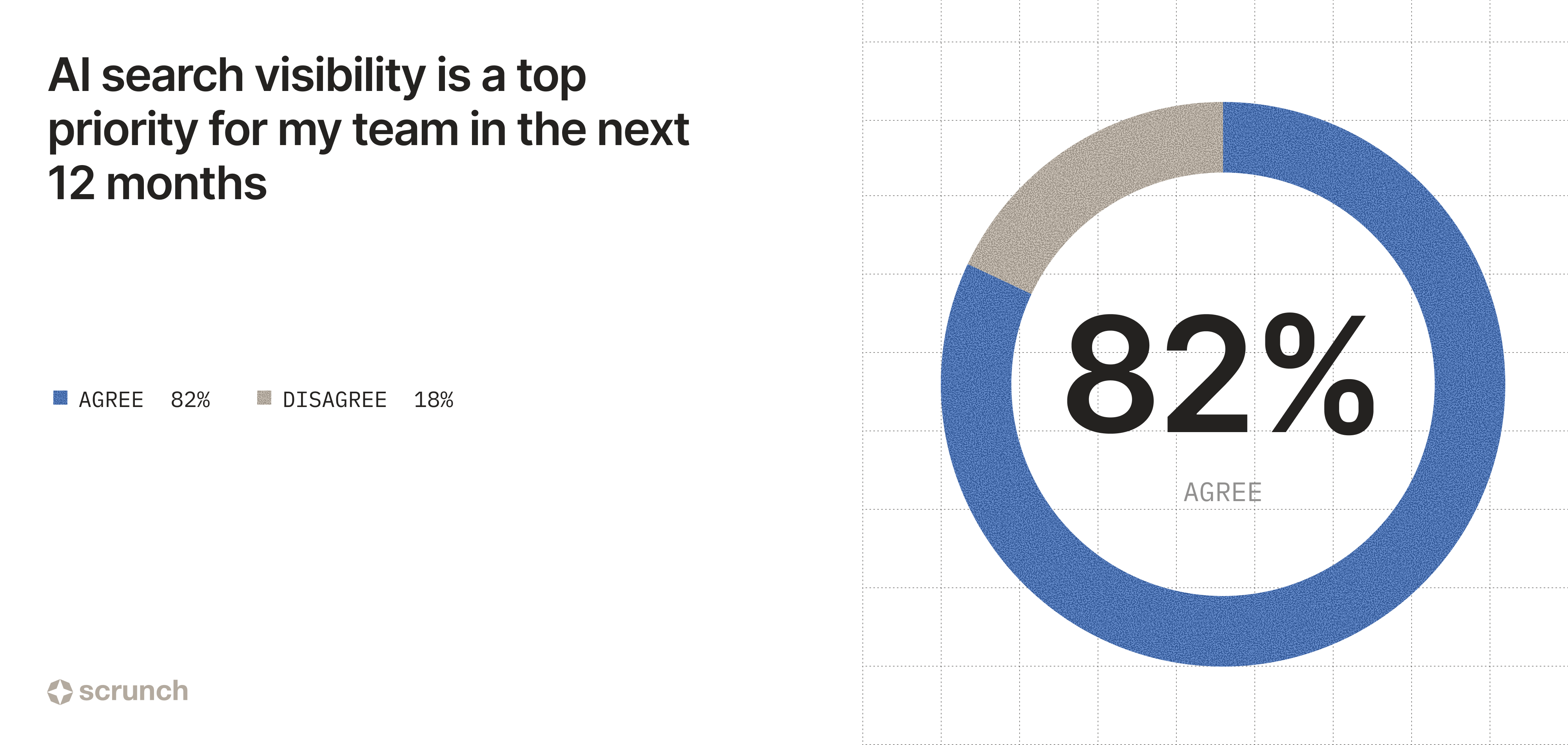
AI search optimization didn’t exist as a discipline a few years ago. Today it’s a boardroom priority.
The data in our report shows that most teams are still very much in the early innings of their strategies—and that provides a real opportunity for the brands that move forward with focus.
Early movers get to set the benchmark everyone else measures against.
Want to understand how your team measures up to your peers and competitors?
Read the full report to dig deeper into the data.
Get started with Scrunch
Get your site AI-ready so you show up in answers, get cited, and grow revenue. Try a free 7-day trial or book a demo.


